
Key takeaways
TL;DR- Tooth inclination and jaw position call for different approaches. A profile photograph cannot replace an examination.
- Braces, clear aligners and jaw surgery serve different needs. Suitability depends on a clinical assessment of the bite, jaws and oral health.
- An orthodontic check by age seven does not mean treatment starts immediately. Retainers and follow-up remain important after treatment.
What are protruding teeth? Dental, skeletal and apparent differences
“Buck teeth” and “protruding teeth” are everyday descriptions. A dentist distinguishes tooth inclination, the horizontal distance between upper and lower front teeth, and the relationship between the jaws. Prominent teeth do not automatically mean excessive upper-jaw growth, and a profile photograph cannot establish a diagnosis.
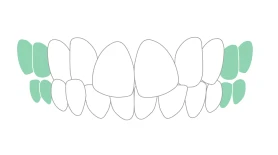
Dental and skeletal protrusion: what differs?
| Type | Main consideration | Assessment and care |
|---|---|---|
| Dental protrusion | Front-tooth inclination, position and space in the dental arch | Assess whether appliances can adjust tooth position |
| Skeletal discrepancy | Jaw position, size and relationship | Assess severity; some cases need multidisciplinary or surgical assessment |
| Combined dental and skeletal features | Both teeth and jaw relationships contribute | Use examination findings and indicated imaging to plan care |
These categories explain the differences; they are not a self-diagnosis checklist. Ask the dentist whether X-rays, scans or other investigations are needed and what each would clarify.
What does “apparent protrusion” mean?
“Apparent protrusion” is an informal description rather than one formal diagnosis. Lip and soft-tissue features can influence the profile, but this does not prove that tooth position is normal. A dental examination distinguishes these possibilities.
Does mild protrusion need treatment?
The decision considers bite function, oral health, severity and personal priorities. Observation or treatment may be discussed. Appearance or the word “mild” alone cannot determine the right approach.
Are protruding teeth and a prominent upper jaw the same thing?
“Buck teeth” often refers to increased overjet: upper front teeth extending farther forward horizontally. A prominent upper jaw and protruding incisors describe different features; neither is the same as a deep vertical bite.
Different everyday terms can cover quite different conditions. Ask the dentist to explain the contribution of the teeth and jaws instead of assigning yourself a diagnosis.
Correcting protruding teeth: three approaches
First establish whether the protrusion relates to teeth, jaws or both. The table compares three approaches; it does not imply that each suits you or that Beame offers every treatment listed.
| Approach | How it works and what to consider | Assessment focus |
|---|---|---|
| Fixed braces | Brackets and wires guide tooth movement; cleaning around the appliance needs care | Tooth alignment, bite and required movements |
| Clear aligners | A sequence of customised trays; prescribed wear is essential | Feasibility of the movements, oral health and adherence |
| Orthognathic surgery | Jaw surgery, potentially combined with orthodontics before and after surgery | Severe jaw discrepancy that cannot be adequately addressed by tooth movement alone |
The Department of Health describes a broad 1½–3-year range for fixed-appliance treatment, depending on complexity. This is not an individual promise. A dentist confirms aligner quantities, wear and follow-up requirements.
Severe skeletal discrepancies may need assessment by orthodontic and maxillofacial specialists. A preference for clear aligners does not replace assessment of the jaws and bite.
Considering correction? Understand Beame’s consultation arrangements
Beame’s Hong Kong stores provide clear-aligner information consultations covering the product, plans, reference fees and visit arrangements. Confirm the location and arrangements for dental examinations, clinical scans, diagnosis and treatment separately. A dentist confirms whether orthodontics or clear aligners are suitable.
Before booking, confirm the consultation and examination locations, whether scans are indicated, and the fees and conditions. Review the plan, follow-ups and retainers before deciding to begin. Booking does not mean agreeing to treatment.
Causes: inherited features and acquired habits
Inherited features, jaw growth, tooth size and arch space can affect alignment and profile. Persistent thumb or pacifier sucking, lip habits and early loss of baby teeth may also be relevant to an assessment. Protrusion does not have one universal cause.
Seek dental advice for decay or injury in baby teeth so that pain, tooth preservation and space for permanent teeth can be assessed. Do not assume every problem will resolve when the tooth is replaced.
How does mouth breathing relate to protrusion?
Persistent mouth breathing deserves attention but does not establish the cause of protruding teeth. Frequent nasal blockage, mouth breathing or snoring in a child warrants appropriate medical and dental assessment of breathing, jaw development and the bite.
Beyond appearance: health and daily life
The effects depend on the actual bite and oral health. Prominent front teeth can be more vulnerable to injury, while alignment or bite problems may make cleaning, chewing or speech more difficult. Appearance can also affect how someone feels about their smile.
Tell the clinician about tooth wear, jaw discomfort, persistent mouth breathing or sleep concerns. These symptoms should not all be attributed to protruding teeth, and orthodontics should not be assumed to resolve them all.
Face-reading beliefs and a clinical view of protruding teeth
Linking protruding teeth to character or fortune is a folk belief, not a medical assessment. Teeth, lips and jaw appearance do not establish personality or determine the need for treatment.
If your profile or lip appearance concerns you, describe the concern at a consultation. A dentist assesses teeth, jaws and bite before explaining the available options and their limits.
Children’s protruding teeth and aftercare
When should a child be assessed?
The American Association of Orthodontists recommends a first orthodontic check by age seven. An assessment may lead to observation, later follow-up or early treatment when indicated; it does not mean every child starts braces immediately.
Raise concerns about prominent teeth, crowding, an unusual bite or persistent mouth breathing during the change from baby to permanent teeth. Timing and appliance choice remain individual decisions.
Explore children’s orthodontic consultationAfter treatment and maintaining tooth position
Teeth can still move after orthodontic treatment. Retainers help maintain their position. Follow the dentist’s instructions on wear, cleaning and review; two years is not a universal point for stopping retention.
Contact the dentist if a retainer is damaged, no longer fits or teeth appear to have shifted. Do not force an ill-fitting retainer or assume that a complete new treatment is necessary.
References
- Department of Health: orthodontic treatment
- Department of Health: fillings
- Department of Health: announcement of the 2021 Oral Health Survey
- AAO: a first orthodontic visit by age seven
- AAO: overjet and overbite
- AAO: retainers and continuing care
- NHS: overview of orthodontics
- AAO: orthodontic surgery
This is general oral-health information, not a diagnosis. A registered dentist must assess individual teeth, bite and treatment needs.

About the author
Beame Dental Team
Practical information on clear aligners, oral care and consultation arrangements. This article is for general information; individual treatment requires assessment by a qualified dental professional.